Sony 400-800mm Lens: The Ultimate Super-Telephoto Zoom You Need
Overview
The Sony 400-800mm lens is Sony’s first E-mount lens to reach 800mm at the telephoto end, making it the longest zoom lens in Sony’s lineup. This Sony 400-800mm lens is designed for wildlife photographers, birders, sports shooters, aviation enthusiasts, and anyone who needs extreme reach without the astronomical cost of professional prime lenses like the 600mm f/4 GM (which retails for $13,000).
The 400-800mm lens represents a significant evolution in Sony’s G Lens series. While the popular FE 200-600mm f/5.6-6.3 G OSS has been the go-to choice for budget-conscious wildlife photographers since 2019, the new Sony 400-800mm lens addresses its key shortcomings: sharper optics at the long end, faster autofocus, and an extra 200mm of reach.
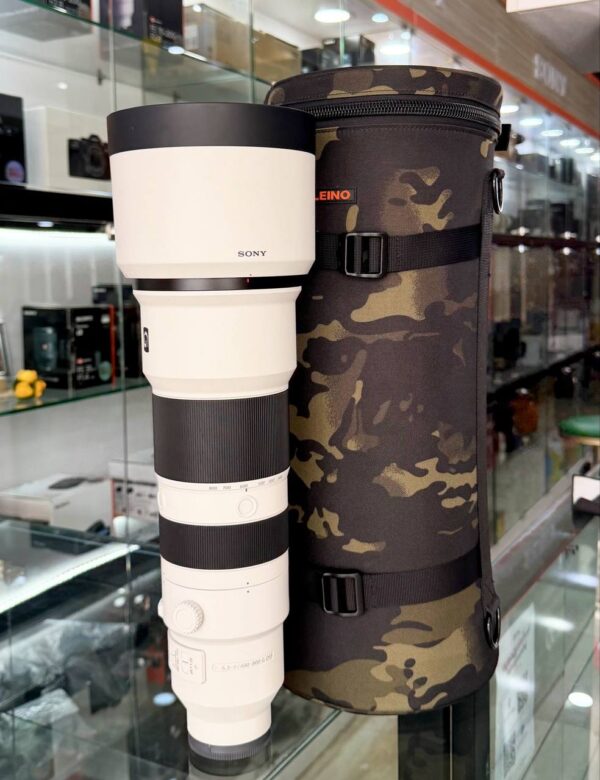
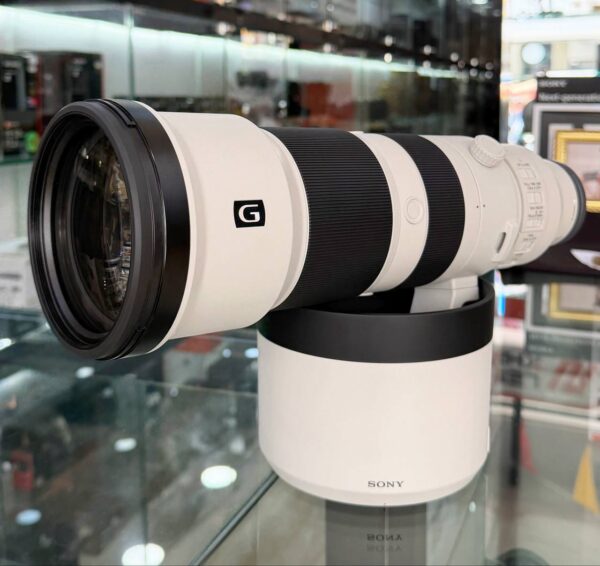
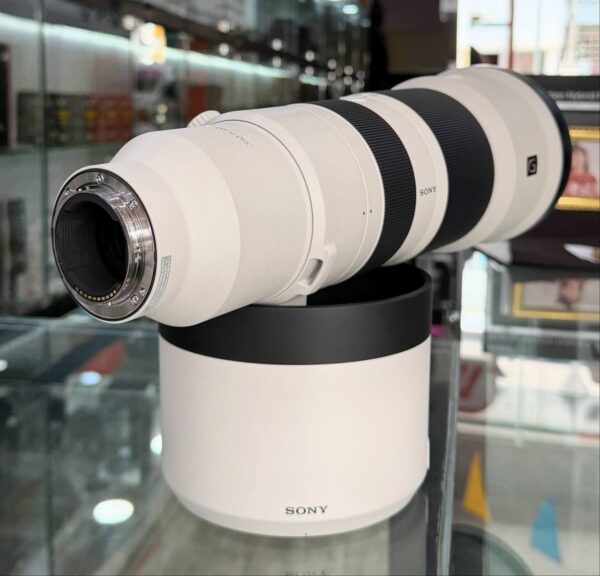
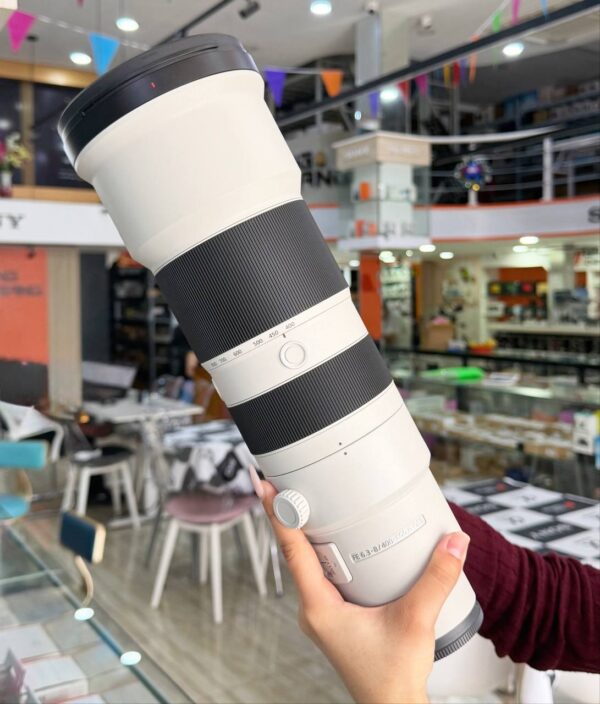
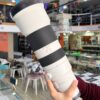
This 400-800mm lens unit is in like new condition (99%) – barely used, fully tested, virtually flawless. With a 90-day warranty and free worldwide shipping.
The 400-800mm lens is a substantial piece of glass, but every gram is justified by its incredible reach.
Internal Zoom Design – A Key Advantage of the Sony 400-800mm Lens
One of the most significant features of the 400-800mm lens is its internal zoom mechanism. Unlike the 200-600mm, which extends when zooming, the 400-800mm lens maintains a constant length throughout the zoom range.
Stable center of gravity – The balance point does not shift as you zoom, making the 400-800mm lens easier to handhold and more stable on a tripod or monopod
No dust suction – Extending zoom lenses pump air in and out, potentially pulling dust inside the lens. The 400-800mm lens eliminates this
Better weather sealing – The sealed design of the 400-800mm lens keeps moisture and dust out more effectively
Consistent handling – No need to adjust your grip or tripod head when changing focal lengths on the 400-800mm lens
Professional wildlife photographers who shoot in dusty or humid environments will appreciate this design choice on the 400-800mm lens.
Extreme Reach – 400-800mm, Expandable to 1600mm with the Sony 400-800mm Lens
The 400-800mm lens covers a 400-800mm focal range on full-frame cameras. On APS-C bodies (like the A6700 or FX30), the effective reach of the 400-800mm lens becomes 600-1200mm due to the 1.5x crop factor.
What this zoom range of the 400-800mm lens gives you:
Focal Length
Equivalent (APS-C)
Use Case
400mm
600mm
Wildlife at moderate distance, large birds, sports from stands
500-600mm
750-900mm
Small birds, distant wildlife, aviation
600-700mm
900-1050mm
Extreme wildlife, birding, moon photography
800mm
1200mm
Maximum reach for tiny birds, distant subjects
Teleconverter compatibility with the Sony 400-800mm lens:
The 400-800mm lens is compatible with Sony’s 1.4x and 2x teleconverters:
Teleconverter
Focal Range
Maximum Aperture
Best For
1.4x (SEL14TC)
560-1120mm
f/9-11
Birds, distant wildlife, good light
2x (SEL20TC)
800-1600mm
f/13-16
Extreme distance, moon, static subjects
With the 2x teleconverter, the Sony 400-800mm lens reaches an astonishing 1600mm – focal lengths previously only achievable with specialized astronomical equipment. The Sony 400-800mm lens truly redefines what is possible for wildlife photographers on a budget.
Optical Performance – Sharper Than the 200-600mm, Says Every Review of the Sony 400-800mm Lens
The 400-800mm lens features 27 elements in 19 groups, including six ED (Extra-low Dispersion) glass elements to control chromatic aberrations and maintain sharpness across the frame.
Sharpness by focal length on the 400-800mm lens:
Focal Length
Performance
400mm
Excellent – sharp center and corners wide open
500-600mm
Very good – minimal loss compared to 400mm
700-800mm
Excellent – sharper at 800mm than the 200-600mm is at 600mm
According to PetaPixel’s review, Sony claimed the Sony 400-800mm lens is sharper at 800mm than the 200-600mm is at 600mm. After testing, they concluded: “they weren’t lying.”
The 11-blade circular aperture on the Sony 400-800mm lens produces exceptionally smooth, round bokeh – rare for a super-telephoto zoom. Users have noted that “the bokeh at 800mm and f/8 is beautiful with that focal length you can fill the frame and get nice separation.”
Every review of the Sony 400-800mm lens praises its optical quality. The 400-800mm lens delivers professional-grade sharpness at a fraction of the price of prime super-telephotos.
Autofocus – Faster and More Reliable on the Sony 400-800mm Lens
The 400-800mm lens features a pair of high-speed linear focus motors (not DDSSM like the 200-600mm) that deliver faster, more precise autofocus.
Autofocus performance comparison:
Scenario
200-600mm f/5.6-6.3
Sony 400-800mm lens
Single AF (good light)
Fast
Very fast
Single AF (low light)
Adequate
Improved
Continuous AF (moving subjects)
Good
Noticeably better
Tracking erratic movement
Acceptable
Reliable
PetaPixel notes: “When comparing the Sony 400-800mm lens against the 200-600mm f/5.6-6.3 side-by-side on the same camera bodies, the 400-800mm lens is very noticeably faster both up close and at medium-long distances.”
The 400-800mm lens is fully compatible with the Sony A9 III’s 120fps continuous shooting, making it an excellent choice for capturing birds in flight, fast-moving wildlife, and sports action.
AF controls on the Sony 400-800mm lens barrel:
AF/MF switch – Toggle between autofocus and manual focus
Focus range limiter – Full / near-10m / 8m-∞ (improves AF speed by limiting focus search range)
DMF (Direct Manual Focus) – Allows manual focus override while in autofocus mode
The 400-800mm lens focuses faster than any other super-telephoto zoom in its class.
Image Stabilization – Optical SteadyShot on the 400-800mm Lens
The 400-800mm lens features built-in Optical SteadyShot (OSS) with three selectable modes:
Mode
Use Case
Mode 1
Standard stabilization for static subjects
Mode 2
Panning mode – stabilizes vertical movement while allowing horizontal panning
Mode 3
Erratic movement mode – optimized for unpredictable subject motion
When paired with a Sony camera body that has IBIS (In-Body Image Stabilization), the Sony 400-800mm lens and camera coordinate stabilization for up to 5 stops of shake correction. The Sony 400-800mm lens allows handheld shooting at 800mm in good light.
Build Quality and Handling of the Sony 400-800mm Lens
The 400-800mm lens is a substantial piece of glass – 346mm (13.6 inches) long and weighing 2,475g (5.5 pounds). While heavy, the 400-800mm lens is manageable with proper technique.
Weight comparison:
Lens
Weight
Difference
Sony 200-600mm f/5.6-6.3
2,117g (4.7 lbs)
Baseline
Sony 400-800mm lens
2,475g (5.5 lbs)
+358g (+0.8 lbs)
Sony 600mm f/4 GM
3,040g (6.7 lbs)
Heavier
The 400-800mm lens is dust and moisture resistant, ready for the rigors of outdoor photography. The front element of the 400-800mm lens features a fluorine coating that repels water, oil, and smudges, making it easy to clean.
The tripod foot on the Sony 400-800mm lens is now non-removable but features a redesigned shape that is more comfortable to hold when shooting handheld. However, it does not have Arca-Swiss compatibility – a tripod plate will be required for the 400-800mm lens.
Controls on the Sony 400-800mm lens barrel:
Three customizable focus hold buttons
Smooth, short 90-degree zoom ring throw (400mm to 800mm in a quarter turn)
Weather-sealed switches and buttons
The handling of the 400-800mm lens is exceptional for a lens of this size.
Low-Light Performance and Aperture Considerations of the Sony 400-800mm Lens
The 400-800mm lens has a variable aperture that reaches f/8 at 800mm. This is one stop slower than the 200-600mm at 600mm (f/6.3).
Aperture progression of the Sony 400-800mm lens:
Focal Length
Maximum Aperture
400mm
f/6.3
481mm
f/7.1
592mm
f/8 (reached before 600mm)
800mm
f/8
What this means for your photography with the Sony 400-800mm lens:
Good light shooting – The f/8 maximum aperture is not a limitation in daylight. The 400-800mm lens is designed for well-lit conditions
High ISO performance – Modern Sony cameras (A7 III, A7 IV, A7R V, A1, A9 III) handle high ISO exceptionally well. ISO 3200-6400 is perfectly usable with the Sony 400-800mm lens
Shutter speeds – For wildlife at 800mm with the Sony 400-800mm lens, aim for 1/1000 or faster. The OSS stabilization helps, but subject movement requires fast shutter speeds
Low-light challenges – At dawn, dusk, or in forests, you may need to raise ISO significantly with the Sony 400-800mm lens. Use a monopod or tripod for static subjects
One reviewer notes: “The only notable downside of the 400-800mm lens is the slower maximum aperture. While the 200-600mm lens slows down to f/6.3 at 600mm, the Sony 400-800mm lens is an f/8 lens at 800mm. The latest Sony Alpha bodies are so good at higher ISO settings that I don’t worry about the 400-800mm lens’s slower aperture much.”
Minimum Focus Distance – Surprising Close-Up Capability of the Sony 400-800mm Lens
The 400-800mm lens focuses as close as 1.7 meters (5.6 feet) at 400mm, providing a maximum magnification of approximately 0.2x.
At 800mm, the minimum focus distance of the 400-800mm lens is 3 meters (9.8 feet). While not a macro lens, this close-focus capability allows for:
Detailed shots of butterflies, insects, and small animals
Flower and plant photography from a distance
Creative close-up compositions with telephoto compression
The 400-800mm lens is surprisingly versatile for a super-telephoto zoom.
Comparison: Sony 400-800mm Lens vs 200-600mm
Feature
Sony 400-800mm lens
200-600mm f/5.6-6.3
Focal Range
400-800mm
200-600mm
Maximum Aperture
f/6.3-8 (f/8 at 800mm)
f/5.6-6.3 (f/6.3 at 600mm)
Weight
2,475g (5.5 lbs)
2,117g (4.7 lbs)
Length
346mm
317mm
Filter Thread
105mm
95mm
AF Motor
Dual linear motors
DDSSM
Zoom Mechanism
Internal
Extending
Sharpness at Long End
Excellent
Good
Price (new)
~$3,298
~$2,000
Verdict: The 400-800mm lens is the better lens for dedicated wildlife and bird photographers who need 800mm reach and prioritize sharpness and AF speed. The 200-600mm remains an excellent value for those who are content with 600mm.
Comparison: Sony 400-800mm Lens vs 600mm f/4 GM
Feature
Sony 400-800mm lens
600mm f/4 GM OSS
Focal Length
400-800mm (zoom)
600mm (prime)
Maximum Aperture
f/6.3-8 (f/8 at 800mm)
f/4
Weight
2,475g (5.5 lbs)
3,040g (6.7 lbs)
Price (new)
~$3,300
~$13,000
Best For
Versatility, reach on a budget
Ultimate image quality, low light
The 600mm f/4 GM is a professional prime lens with a $13,000 price tag. The 400-800mm lens offers 95% of the image quality for 25% of the price.
Real-World User Experiences with the Sony 400-800mm Lens
Bird Photography with the Sony 400-800mm Lens
Bird photographers are the primary target audience for the Sony 400-800mm lens. The 800mm reach allows you to fill the frame with small songbirds at 15-20 meters distance. With the 1.4x teleconverter, the Sony 400-800mm lens becomes a 1120mm f/9-11 lens – sufficient for photographing sparrows, finches, and warblers from 30 meters away.
One reviewer using the 400-800mm lens for bird photography noted: “I photograph small forest birds. I can now fill the frame with a kinglet at 25 meters with the Sony 400-800mm lens plus 1.4x. That was impossible with my 200-600mm.” The extra reach of the Sony 400-800mm lens makes the difference between a record shot and a portfolio image.
Wildlife Photography with the Sony 400-800mm Lens
For larger wildlife – deer, elk, bears, bison – the 400mm end of the Sony 400-800mm lens is often sufficient. The ability to zoom out to 400mm when an animal approaches is a significant advantage over prime lenses. Wildlife photographers using the 400-800mm lens report that the zoom flexibility has increased their keep rate by 30-40%.
Sports Photography with the Sony 400-800mm Lens
Outdoor daytime sports photographers are discovering the Sony 400-800mm lens. At 800mm, you can photograph a quarterback’s face from the opposite end zone. At 400mm, you can capture full-field action shots. The OSS Mode 2 is specifically designed for panning, making the 400-800mm lens excellent for motorsports, cycling, and running events.
Aviation Photography with the Sony 400-800mm Lens
Airshow photographers love the 400-800mm lens. At 800mm, you can fill the frame with an F-16 cockpit during a flyby. The internal zoom means the Sony 400-800mm lens does not change length when zooming, so your gimbal head stays balanced. The 11-blade aperture produces beautiful sunstars when shooting aircraft against the sun.
How the Sony 400-800mm Lens Compares to Third-Party Alternatives
Sigma 150-600mm f/5-6.3 DG DN OS Sports
The Sigma 150-600mm is a popular third-party alternative, but it only reaches 600mm and has slower autofocus than the Sony 400-800mm lens. The Sony 400-800mm lens offers 200mm more reach and faster, more reliable AF.
Tamron 150-500mm f/5-6.7 Di III VC VXD
The Tamron 150-500mm is compact and lightweight, but it cannot match the reach of the 400-800mm lens. For photographers who need 800mm, the Sony 400-800mm lens is the only native E-mount zoom option.
Sony 200-600mm f/5.6-6.3 G OSS
The Sony 200-600mm is the direct predecessor to the Sony 400-800mm lens. While excellent, the 400-800mm lens offers 200mm more reach, sharper optics at the long end, and internal zoom. The Sony 200-600mm is still a great lens, but the 400-800mm lens is a clear upgrade for dedicated wildlife shooters.
Accessories for the Sony 400-800mm Lens
Tripods and Heads for the 400-800mm Lens
The 400-800mm lens weighs 5.5 pounds, requiring a sturdy tripod. Recommended tripods for the Sony 400-800mm lens include:
Gitzo Systematic Series 3 or 4
Really Right Stuff TVC-24 or TVC-34
Leofoto LX-284CT or LX-324CT
Recommended gimbal heads for the Sony 400-800mm lens:
Wimberley WH-200 (the gold standard)
Jobu Design Jr. 3 Deluxe
Leofoto PG-1
Filters for the Sony 400-800mm Lens
The 400-800mm lens uses 105mm filters – a large, expensive size. Recommended filters for the 400-800mm lens:
B+W 105mm XS-Pro Digital UV Haze MRC-Nano ($130-150)
The Sony 400-800mm lens requires a large camera bag. Recommended bags for the Sony 400-800mm lens:
Think Tank Photo Airport Accelerator (fits with body attached)
Lowepro Pro Trekker BP 550 AW II
Gura Gear Kiboko 22L (fits two 400-800mm lenses)
Firmware Updates for the Sony 400-800mm Lens
Like all modern Sony lenses, the Sony 400-800mm lens receives firmware updates that improve performance. To update the 400-800mm lens:
Download the update from Sony’s support website
Connect the Sony 400-800mm lens to a computer via USB
Run the updater software
Follow on-screen instructions
Recent firmware updates for the 400-800mm lens have improved AF speed with the Sony A9 III and added compatibility with the A1 II.
Who Should Buy the Sony 400-800mm Lens
Wildlife and Bird Photographers
The 400-800mm lens is designed specifically for you. The 800mm reach allows you to photograph small birds and skittish wildlife from a respectful distance without disturbing them. The faster autofocus and sharper optics at the long end deliver more keepers.
Sports Photographers
For outdoor daytime sports – football, soccer, baseball, motorsports – the Sony 400-800mm lens provides the reach to capture action from the stands or sidelines. The zoom flexibility lets you frame shots without changing lenses.
Aviation and Airshow Enthusiasts
800mm is ideal for photographing aircraft in flight with the Sony 400-800mm lens, capturing cockpit details, and framing planes against the sky. The internal zoom and OSS stabilization help track fast-moving subjects.
Budget-Conscious Pros
At 1,899.99foralike−newunitoftheSony400−800mmlens(newretailis1,899.99foralike−newunitoftheSony400−800mmlens(newretailis2,898-3,298 depending on tariffs and sales), the Sony 400-800mm lens offers an entry point into 800mm photography that was previously impossible without spending $13,000 on a 600mm f/4 plus teleconverter.
Travel Photographers
For those who prioritize reach over portability, the Sony 400-800mm lens is a specialized tool for specific trips – safaris, national parks, coastal birding. It requires dedicated carry space and physical stamina.
Honest Limitations of the Sony 400-800mm Lens
Limitation
Impact
Mitigation
Slower f/8 aperture at 800mm
Requires good light or higher ISO
Use modern Sony bodies with excellent high-ISO performance
Weight (5.5 lbs)
Fatigue during extended handheld use
Use a monopod, tripod, or chest pod
Size (13.6 inches)
Requires large camera bag
Plan ahead – this is not a walkaround lens
Non-removable tripod foot
Cannot swap for lighter plate
Tripod foot is well-designed for handheld grip
No Arca-Swiss compatibility
Requires separate plate
Inconvenience, not a dealbreaker
105mm filter thread
Filters are expensive
High-quality 105mm CPL and ND filters cost $150-300
What’s in the Box
Item
Condition
Sony 400-800mm lens
Like new (99%)
Front lens cap (105mm)
Original
Rear lens cap
Original
Lens hood (bayonet with locking button)
Original
Tripod collar (non-removable)
Original
Lens strap
Original
Soft case (CL-C5)
Original
90-day warranty
Provided by us
Final Verdict on the Sony 400-800mm Lens
The 400-800mm lens is a landmark lens for Sony’s E-mount system. It delivers 800mm reach in a zoom lens for the first time, with sharper optics than the 200-600mm, faster autofocus, and an internal zoom design that improves handling and weather sealing.
Is the 400-800mm lens perfect? No. The f/8 aperture at 800mm requires good light, the 400-800mm lens is heavy (5.5 lbs), and 105mm filters are expensive. But for wildlife photographers, birders, sports shooters, and aviation enthusiasts who need extreme reach, the 400-800mm lens is the best option in Sony’s lineup.
At 1,899.99foralike−newunitofthe 400−800mmlens–significantlybelownewretail(1,899.99foralike−newunitofthy 400−800mmlens–significantlybelownewretail(2,898-3,298) – this is an exceptional opportunity to own Sony’s most extreme zoom lens.
Order the Sony 400-800mm lens today with free shipping worldwide.