free worldwide shipping | ships within 24 hours
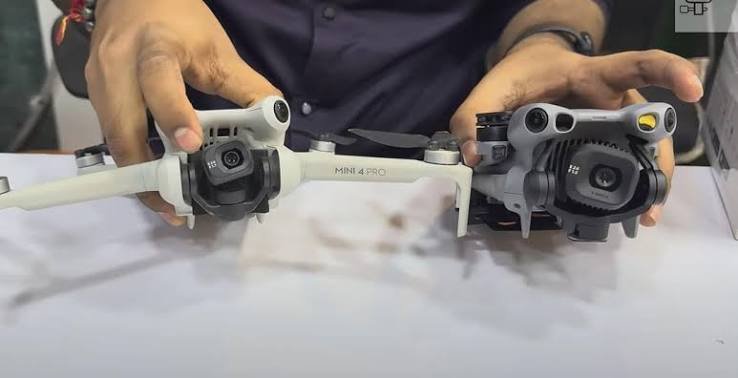
DJI Mini 5 Pro vs Mini 4 Pro 2026: The Ultimate Sub-250g Drone Showdown

The DJI Mini 5 Pro vs Mini 4 Pro debate is one of the most common questions among drone enthusiasts and content creators. Both drones weigh under 250 grams, making them exempt from registration in many countries. Both offer omnidirectional obstacle avoidance and 4K video. But the Mini 5 Pro introduces significant upgrades that might justify the jump.
This DJI Mini 5 Pro vs Mini 4 Pro comparison covers everything that matters. Camera, sensor, obstacle avoidance, flight time, gimbal, and value. By the end, you will know exactly which drone belongs in your kit.
DJI Mini 5 Pro vs Mini 4 Pro: Quick Specs
| Feature | DJI Mini 4 Pro | DJI Mini 5 Pro |
|---|---|---|
| Sensor | 1/1.3-inch CMOS, 48MP | 1-inch CMOS, 50MP |
| Aperture | f/1.7 | f/1.8 |
| Video | 4K up to 100fps | 4K up to 120fps |
| Slow Motion | 4K/100fps, FHD/200fps | 4K/120fps, FHD/240fps |
| Dynamic Range | ~12 stops | ~14 stops |
| Obstacle Sensing | Omnidirectional (vision) | Omnidirectional + Forward LiDAR |
| Night Obstacle Sensing | No | Yes (1 lux) |
| Gimbal Rotation | Standard | 225° |
| Flight Time | 34 min (standard) | 36 min (standard), 52 min (Plus) |
| Internal Storage | ~2GB | 42GB |
| Wind Resistance | ~10-11 m/s | ~12 m/s |
| Transmission System | O4 | O4+ |
| Weight | 249.9g | 249.9g |
| Release Year | 2023 | 2025 |
| Price (Fly More RC 2) | ~$959 | ~$1,099 |
Camera and Sensor: The Biggest Difference
The most significant difference in the DJI Mini 5 Pro vs Mini 4 Pro comparison is the sensor. This single factor will likely determine which drone is right for you.
Mini 4 Pro Sensor: 1/1.3-inch CMOS, 48MP. This sensor delivers excellent detail in daylight and offers solid performance for a sub-250g drone. It captures 12-stop dynamic range, which is good for most scenes. However, it struggles in low-light conditions, with noise becoming noticeable at higher ISOs. The smaller sensor also limits the drone’s ability to capture detail in shadows and highlights simultaneously. DJI Mini 5 Pro vs Mini 4 Pro
Mini 5 Pro Sensor: 1-inch CMOS, 50MP. This is a massive upgrade. The 1-inch sensor has approximately 1.7x the surface area of the 1/1.3-inch sensor, capturing significantly more light. The result is better low-light performance, greater dynamic range (approximately 14 stops vs 12 stops), and more detail in shadows. The 50MP resolution allows for more cropping flexibility without losing detail. In the DJI Mini 5 Pro vs Mini 4 Pro sensor battle, the Mini 5 Pro wins decisively.
Why Sensor Size Matters: A larger sensor captures more light, which translates to less noise, better color accuracy, and more detail in challenging lighting conditions. The difference between 1/1.3-inch and 1-inch is noticeable at dusk, dawn, and night. For creators who shoot during golden hour or in urban environments with mixed lighting, the Mini 5 Pro’s sensor is a significant advantage.
Real-World Example: Shooting a sunset scene, the Mini 4 Pro may struggle to retain detail in both the bright sky and dark foreground. The Mini 5 Pro, with its 14-stop dynamic range, will capture both with more clarity. This means less time in post-production recovering shadows and highlights.
Sensor Verdict: In the DJI Mini 5 Pro vs Mini 4 Pro sensor comparison, the Mini 5 Pro wins. The larger sensor makes a noticeable difference in challenging lighting conditions, particularly at dusk, dawn, and night. DJI Mini 5 Pro vs Mini 4 Pro
Video Capabilities: Smoother Slow Motion
Both drones shoot 4K video, but the Mini 5 Pro offers higher frame rates. This is another area where the DJI Mini 5 Pro vs Mini 4 Pro comparison shows clear differences.
Mini 4 Pro Video: 4K up to 100fps, FHD up to 200fps. Supports 10-bit D-Log M and HLG profiles. This is excellent for most creators. The 100fps slow motion is smooth and cinematic, suitable for most projects. The 10-bit color allows for basic grading without banding.
Mini 5 Pro Video: 4K up to 120fps, FHD up to 240fps. The higher frame rates allow for smoother slow-motion playback, especially for fast-moving subjects. The 14-stop dynamic range provides more flexibility in post-production. Both drones support 10-bit color profiles, but the Mini 5 Pro’s additional dynamic range gives you more room to grade.
Why Frame Rate Matters: Higher frame rates allow you to slow down footage more smoothly. Shooting 4K at 120fps and playing back at 24fps gives you 5x slow motion, compared to 4x slow motion from 100fps. For action sports, wildlife, or dramatic sequences, the extra frames make a difference.
Real-World Example: Filming a cyclist passing by, the Mini 4 Pro’s 4K/100fps slow motion is smooth, but the Mini 5 Pro’s 4K/120fps is noticeably more fluid, especially when slowed down significantly in post-production.
Video Verdict: In the DJI Mini 5 Pro vs Mini 4 Pro video comparison, the Mini 5 Pro wins for slow-motion capabilities and dynamic range.
Obstacle Sensing and LiDAR: Safety First
This is another major differentiator in the DJI Mini 5 Pro vs Mini 4 Pro comparison. Safety is critical when flying drones, especially for beginners.
Mini 4 Pro Obstacle Sensing: Omnidirectional binocular vision system with downward 3D infrared sensor. This system works well in good lighting conditions but requires adequate lighting (lux > 15) to function effectively. Nightscape obstacle sensing is not supported. In low light, the system may not detect obstacles, increasing the risk of collisions.
Mini 5 Pro Obstacle Sensing: Omnidirectional binocular vision system PLUS forward-facing LiDAR. The LiDAR sensor operates in conditions as dark as 1 lux, which is approximately starlight conditions. Nightscape omnidirectional obstacle sensing is supported. The drone can memorise flight paths and return safely even without satellite signals. This is a significant safety upgrade.
What is LiDAR? LiDAR (Light Detection and Ranging) uses laser pulses to measure distance. Unlike cameras, which need light to “see,” LiDAR works in the dark. This makes the Mini 5 Pro much safer for night flying or indoor use.
Real-World Example: Flying in a forest at dusk, the Mini 4 Pro’s vision sensors may not detect thin branches in low light. The Mini 5 Pro’s LiDAR will detect them, preventing a crash. For creators who fly in challenging environments, this is a significant advantage.
LiDAR Verdict: In the DJI Mini 5 Pro vs Mini 4 Pro safety comparison, the Mini 5 Pro wins significantly. The LiDAR sensor makes night flying much safer and more reliable. DJI Mini 5 Pro vs Mini 4 Pro
Gimbal: More Creative Freedom
The gimbal difference is substantial in the DJI Mini 5 Pro vs Mini 4 Pro comparison. A better gimbal means more creative shot options.
Mini 4 Pro Gimbal: Standard gimbal with 90° rotation for vertical shooting. Good for basic vertical content like Instagram Reels or TikTok. The gimbal is stable and smooth but limited in its range of motion.
Mini 5 Pro Gimbal: 225° rotation gimbal. Allows for more creative panning and tilting without digital crop. Similar to the Mavic 4 Pro’s gimbal system. Enables dynamic rotating shots, such as orbiting a subject while maintaining framing.
Why Gimbal Rotation Matters: A wider rotation range allows for more dynamic shots. You can tilt the camera up and down more freely, creating dramatic reveals. The 225° rotation also allows for “Dutch angle” shots, where the horizon is tilted for artistic effect. DJI Mini 5 Pro vs Mini 4 Pro
Real-World Example: Shooting a slow reveal of a mountain range, the Mini 4 Pro’s limited gimbal range may require you to fly the drone to achieve the desired angle. The Mini 5 Pro can tilt the gimbal to achieve the same shot without moving the drone, making the shot smoother.
Gimbal Verdict: The Mini 5 Pro’s flexible gimbal is a creative game-changer in the DJI Mini 5 Pro vs Mini 4 Pro debate.
Flight Time and Battery
Mini 4 Pro Flight Time: Up to 34 minutes with standard battery, up to 39 minutes with Plus battery. This is respectable for a sub-250g drone. However, real-world flight time is often lower, especially in windy conditions. DJI Mini 5 Pro vs Mini 4 Pro
Mini 5 Pro Flight Time: Up to 36 minutes with standard battery, up to 52 minutes with Plus battery. The standard battery offers a slight improvement, but the Plus battery is a significant upgrade. The Plus battery adds weight, pushing the drone over the 250g limit, but the extended flight time is worth it for many creators.
Flight Time Verdict: The Mini 5 Pro offers slightly longer flight time, with a significant jump when using the Plus battery. In the DJI Mini 5 Pro vs Mini 4 Pro flight time comparison, the Mini 5 Pro wins.
Internal Storage: Convenience Upgrade
Mini 4 Pro Storage: Approximately 2GB internal. This is barely enough for a few minutes of 4K footage. It is essentially a backup for when you forget your SD card, but not much more.
Mini 5 Pro Storage: 42GB internal. This provides meaningful backup capacity when you forget your SD card or need extra storage. 42GB is enough for approximately 30 minutes of 4K footage, giving you a safety net.
Storage Verdict: The Mini 5 Pro’s 42GB storage is a significant quality-of-life improvement in the DJI Mini 5 Pro vs Mini 4 Pro comparison. DJI Mini 5 Pro vs Mini 4 Pro
Price and Value
| Model | Approximate Price (Fly More w/ RC 2) |
|---|---|
| DJI Mini 4 Pro | ~$959 |
| DJI Mini 5 Pro | ~$1,099 |
The Mini 5 Pro Fly More Combo with RC 2 controller is currently priced around $1,099, down 31% from its launch price. The Mini 4 Pro Fly More Combo with RC 2 is available at a 9% discount for $959.
The $140 price difference buys you the larger sensor, LiDAR, more internal storage, and improved gimbal. For many creators, this is a worthwhile investment.
Which Drone Should You Buy?
The DJI Mini 5 Pro vs Mini 4 Pro choice comes down to your priorities.
Choose the DJI Mini 4 Pro if:
- You are on a budget (~$140 cheaper)
- You primarily shoot in good daylight conditions
- You do not need LiDAR or night obstacle avoidance
- You do not need the 42GB internal storage
- You are a casual creator
- You shoot 4K/100fps slow motion is sufficient
- You do not need the 225° gimbal
Choose the DJI Mini 5 Pro if:
- You need the 1-inch sensor for better low-light performance
- You want LiDAR obstacle avoidance for safer night flights
- You need the 225° gimbal for creative shots
- You want 42GB internal storage as a backup
- You shoot 4K/120fps slow motion
- You want improved wind resistance
- You plan to fly in challenging environments
- You are a professional or serious creator
Frequently Asked Questions About DJI Mini 5 Pro vs Mini 4 Pro
Is the DJI Mini 5 Pro worth the upgrade from the Mini 4 Pro?
Yes, if you want the larger 1-inch sensor, LiDAR obstacle avoidance, 4K/120fps slow motion, and 42GB internal storage. If you are happy with the Mini 4 Pro’s performance in daylight, the upgrade may not be necessary.
Does the DJI Mini 5 Pro have better low-light performance than the Mini 4 Pro?
Yes. The 1-inch sensor captures approximately 1.7x more light than the 1/1.3-inch sensor. The difference is noticeable at dusk, dawn, and night. DJI Mini 5 Pro vs Mini 4 Pro
Does the DJI Mini 5 Pro have LiDAR obstacle sensing?
Yes. The Mini 5 Pro features forward-facing LiDAR that works in conditions as dark as 1 lux. The Mini 4 Pro does not have LiDAR.
What is the flight time difference between Mini 5 Pro and Mini 4 Pro?
The Mini 5 Pro offers 36 minutes with the standard battery (vs 34 minutes) and 52 minutes with the Plus battery (vs 39 minutes).
Does the DJI Mini 5 Pro weigh under 250g?
Yes. With the standard battery, the DJI Mini 5 Pro weighs 249.9g. The Plus battery pushes it over 250g. DJI Mini 5 Pro vs Mini 4 Pro
Is the DJI Mini 5 Pro available in the United States?
Availability has been limited in the US, with some units purchased through eBay. The Mini 4 Pro has been more widely available.
What is the price difference between DJI Mini 5 Pro and Mini 4 Pro?
The Mini 4 Pro Fly More Combo with RC 2 is around $959. The Mini 5 Pro Fly More Combo with RC 2 is around $1,099. The difference is approximately $140.
Does the Mini 5 Pro have more internal storage than the Mini 4 Pro?
Yes. The Mini 4 Pro has ~2GB of internal storage. The Mini 5 Pro has 42GB of internal storage.
Which drone has better wind resistance?
The Mini 5 Pro has slightly better wind resistance at ~12 m/s, compared to the Mini 4 Pro’s ~10-11 m/s.
When was the DJI Mini 5 Pro released?
The DJI Mini 5 Pro was officially launched in September 2025.
READY TO BUY YOUR DJI MINI 5 PRO OR MINI 4 PRO?
Click here to visit our Shop drones category to explore both models at Camerion Cameras.
NEED ACCESSORIES FOR YOUR DRONE?
https://camerioncameras.com/product-category/accessories
- DJI Mini 4 Pro vs Mini 5 Pro comparison on Digital Camera World
- DJI Mini 5 Pro official specifications on DJI
- DJI Mini 5 Pro review on Amateur Photographer