free worldwide shipping | ships within 24 hours
Sony Alpha 7 III in 2026: Complete Buyer’s Guide

The Sony Alpha 7 III changed everything. When it launched in 2018, the Sony Alpha 7 III set a new standard for full-frame mirrorless cameras. It offered professional features at a semi-professional price. Photographers flocked to it. Even today, the Sony Alpha 7 III remains one of the best-selling full-frame cameras of all time.
Now it is 2026. Eight years have passed. Newer cameras have arrived. Is the Sony Alpha 7 III still relevant? Should you buy one today? This guide answers both questions honestly.
What Is the Sony Alpha 7 III?
The Sony Alpha 7 III is a 24-megapixel full-frame mirrorless camera. It sits in the middle of Sony’s A7 series. Below the high-resolution A7R series. Below the video-focused A7S series. Above the entry-level A7 series.
The Sony Alpha 7 III was designed as an all-rounder. It does everything well. Photography. Video. Action. Portraits. Landscapes. This versatility made the Sony Alpha 7 III a favorite among professionals and enthusiasts alike.
Sony Alpha 7 III Specifications (2026 Update)
Here are the complete specs for the Sony Alpha 7 III:
| Specification | Details |
|---|---|
| Sensor | 24.2MP full-frame CMOS |
| Image Processor | BIONZ X |
| ISO Range | 100-51200 (expandable to 50-204800) |
| Autofocus | 693 phase-detect points, 425 contrast points |
| Continuous Shooting | 10 fps with AF/AE tracking |
| Shutter Speed | 30s to 1/8000s |
| Viewfinder | 2.36M dot OLED EVF |
| Screen | 3.0-inch tilting touchscreen (922k dots) |
| Video | 4K/30p, 1080/120p |
| Image Stabilization | 5-axis IBIS (5 stops) |
| Battery Life | 710 shots (CIPA) |
| Weight | 650g (with battery and card) |
| Dimensions | 127 x 96 x 74 mm |
| Card Slots | Dual (1x UHS-II, 1x UHS-I) |
| Connectivity | USB-C, Wi-Fi, Bluetooth, micro HDMI |
The Sony Alpha 7 III was ahead of its time in 2018. Many of these specifications remain competitive in 2026.
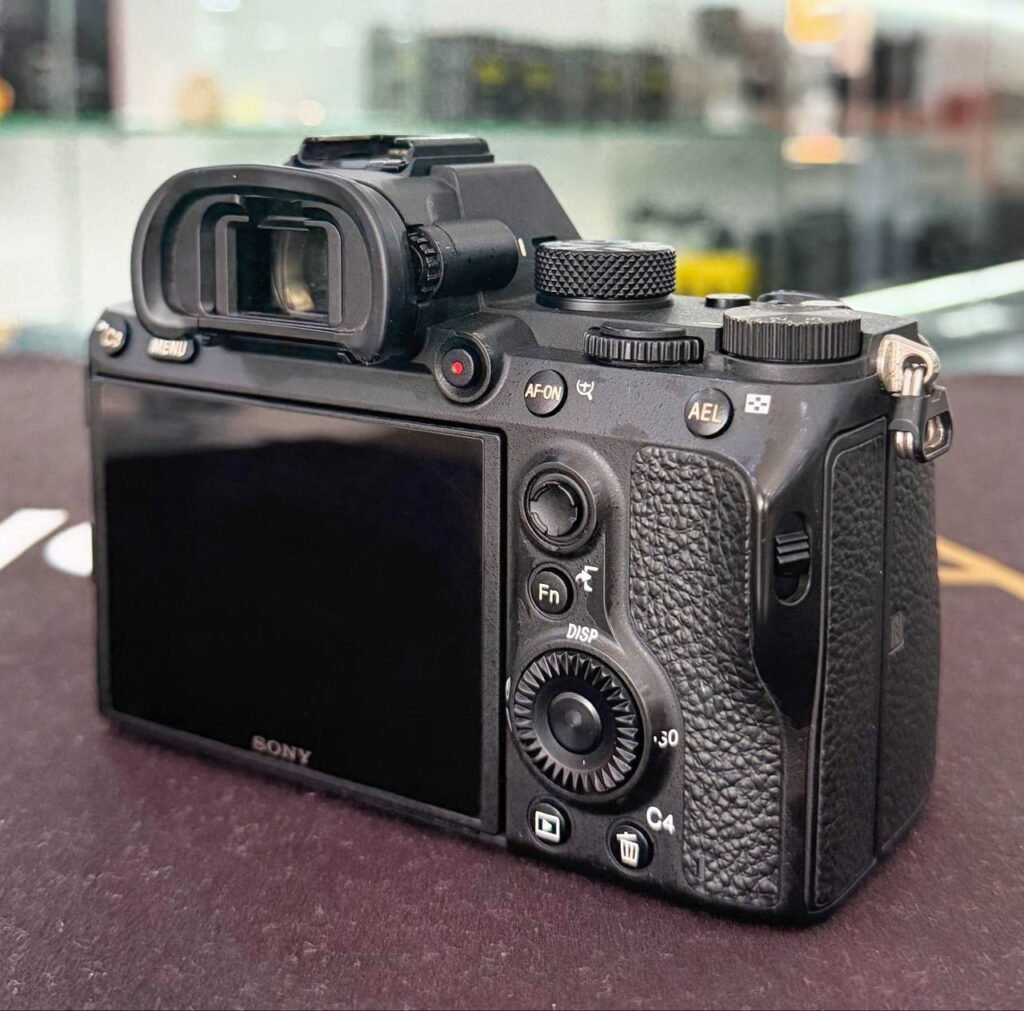
The Good: What the Sony Alpha 7 III Still Does Well
Despite its age, the Alpha 7 III still has significant strengths.
24-Megapixel Full-Frame Sensor
The Sony Alpha 7 III sensor is excellent. 24 megapixels is the sweet spot. Enough resolution for large prints and cropping. Small enough for manageable file sizes. The high ISO performance is outstanding. Even at ISO 12800, images are usable.
In 2026, the Alpha 7 III sensor is not cutting-edge. But it is still very good. For most photographers, the image quality difference between the A7 III and a new A7 IV is negligible.
Industry-Leading Battery Life (Still)
The Sony Alpha 7 III uses the NP-FZ100 battery. This was revolutionary in 2018. It remains excellent in 2026. The Alpha 7 III gets 710 shots per charge. That is double what Canon and Nikon offered at the time.
Even compared to 2026 cameras, the Alpha 7 III battery life is competitive. You can shoot all day on one or two batteries.
10 fps Continuous Shooting
The Sony Alpha 7 III shoots 10 frames per second with continuous autofocus. This is still respectable in 2026. Newer cameras shoot 20-30 fps. But for most photographers, 10 fps is plenty. Sports and wildlife shooters may want faster. Everyone else is fine.
Dual Card Slots
The Sony Alpha 7 III has two SD card slots. One is UHS-II. One is UHS-I. You can backup files in real-time. Professional photographers require this feature. Many entry-level cameras in 2026 still lack dual slots.
5-Axis Image Stabilization
The Sony Alpha 7 III has in-body image stabilization. It provides 5 stops of compensation. This works with any lens. In 2026, IBIS is standard. In 2018, it was a differentiator. The A7 III’s IBIS remains effective.
Huge Lens Ecosystem
The Sony Alpha 7 III uses Sony E-mount. This is the largest full-frame mirrorless lens ecosystem. There are over 70 native E-mount lenses. Plus Sigma, Tamron, and other third-party options. No matter what you shoot, there is a lens for the Alpha 7 III.
The Bad: Where the Sony Alpha 7 III Shows Its Age
An honest Alpha 7 III review must discuss its limitations in 2026.
Autofocus is Good, Not Great
In 2018, the Sony Alpha 7 III autofocus was industry-leading. In 2026, it is merely good. Newer cameras have AI-powered subject recognition. The A7 III has basic eye detection for humans and animals. It works well. But it is not as sticky or reliable as modern systems.
The Alpha 7 III lacks real-time tracking. It lacks bird eye detection. It lacks vehicle recognition. For portraits and general use, the autofocus is fine. For sports and wildlife, modern cameras are significantly better.
Menu System is Painful
The Sony Alpha 7 III menu system is infamous. It is a labyrinth. Settings are buried. Sony improved menus with the A7S III and A7 IV. The Alpha 7 III has the old system. You will spend time searching for settings. You can customize menus. But the learning curve is steep.
Tilting Screen, Not Fully Articulating
The Sony Alpha 7 III screen tilts up and down. It does not flip sideways. It does not flip forward for vlogging. In 2026, fully articulating screens are standard. The A7 III’s screen is limiting for self-recording and vertical shooting.
No 10-bit Video
The Sony Alpha 7 III shoots 8-bit 4:2:0 video internally. Modern cameras shoot 10-bit 4:2:2. The difference matters for color grading. If you push 8-bit footage in post-production, banding appears. For casual video, the A7 III is fine. For professional video work, look elsewhere.
4K Cropping
The Sony Alpha 7 III crops 4K video when shooting at 30p or 24p. The crop is 1.2x. This makes wide-angle lenses less wide. Newer Sony cameras have no crop or minimal crop.
Low Resolution Viewfinder
The EVF on the Alpha 7 III is 2.36 million dots. Modern cameras have 3.68M or 5.76M dots. The A7 III viewfinder is not bad. But compared to newer cameras, it looks less crisp.
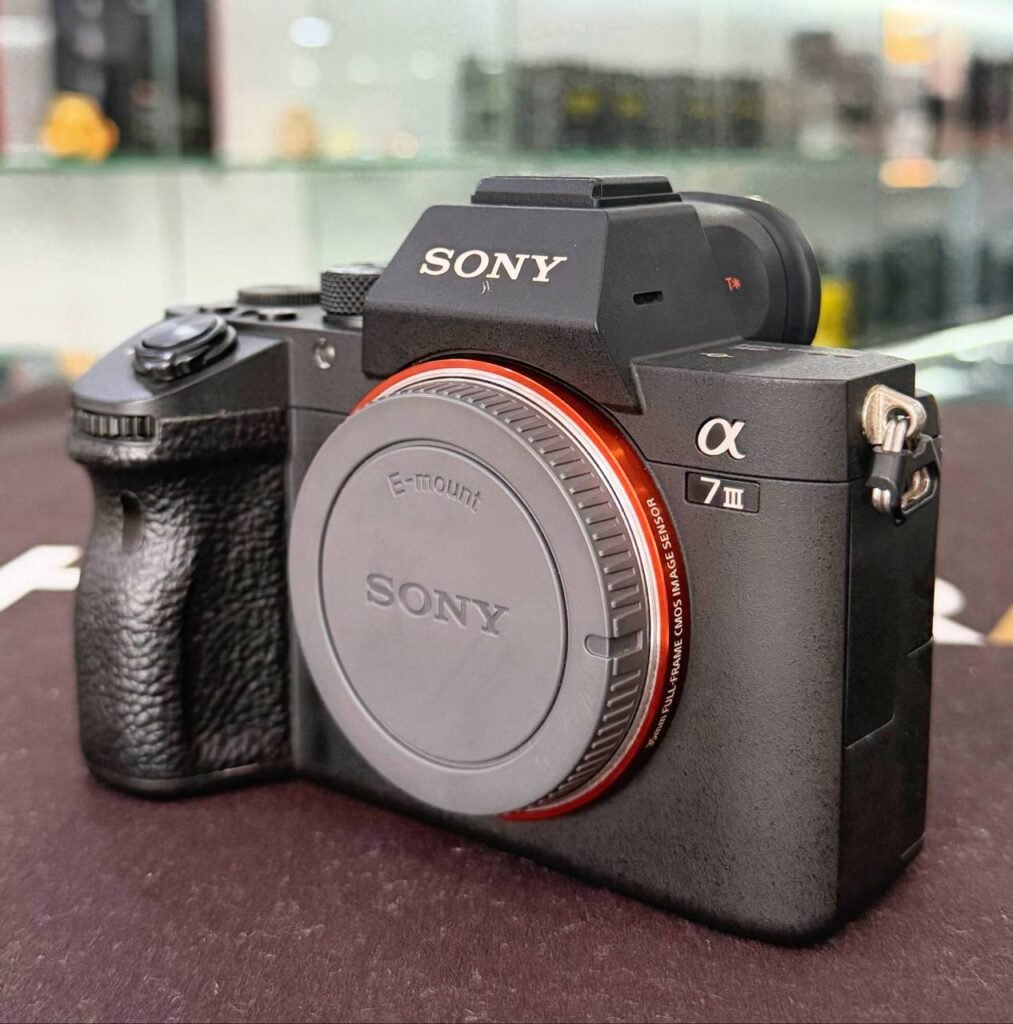
Sony Alpha 7 III vs Newer Competitors
How does the Alpha 7 III compare to cameras released after it?
| Camera | Release Year | Resolution | Autofocus | Video | Battery | Used Price |
|---|---|---|---|---|---|---|
| Sony A7 III | 2018 | 24MP | Good | 4K/30p (1.2x crop) | 710 shots | $900-1,200 |
| Sony A7 IV | 2021 | 33MP | Excellent | 4K/60p (no crop) | 580 shots | $1,800-2,000 |
| Sony A7C II | 2023 | 33MP | Excellent | 4K/60p (no crop) | 540 shots | $1,600-1,800 |
| Canon R6 Mark II | 2022 | 24MP | Excellent | 4K/60p (no crop) | 450 shots | $1,800-2,000 |
| Nikon Z6 III | 2024 | 24MP | Excellent | 4K/120p (no crop) | 410 shots | $1,700-1,900 |
The Alpha 7 III is significantly cheaper than newer options. You are trading modern features for lower price.
Who Should Buy the Sony Alpha 7 III in 2026?
The Alpha 7 III is not for everyone. But it serves specific users well.
Buy the Sony Alpha 7 III if:
- You have a limited budget for full-frame ($900-$1,200 total)
- You prioritize still photography over video
- You want access to Sony’s extensive lens ecosystem
- You do not need advanced video features (10-bit, no crop 4K)
- You are moving from APS-C to full-frame
- You need dual card slots for professional work
- You value battery life above all
Do NOT buy the Sony Alpha 7 III if:
- You need advanced video features (10-bit, 4K/60p no crop)
- You vlog or need a fully articulating screen
- You shoot fast action sports or wildlife
- You require AI-powered subject recognition
- You want the latest autofocus technology
- You have the budget for a newer camera ($1,600+)
Sony Alpha 7 III Price in 2026
The Alpha 7 III price has dropped significantly since launch.
| Condition | Typical Price |
|---|---|
| New (old stock) | $1,300-$1,500 |
| Used (like new) | $1,000-$1,200 |
| Used (good condition) | $900-$1,000 |
| Used (high shutter count) | $700-$900 |
A used Sony Alpha 7 III for under $1,000 is excellent value. You get a professional-grade full-frame camera for the price of an entry-level APS-C model.
Ready to check current Sony Alpha 7 III price and availability? Visit our Shop cameras category for Sony A7 III at Camerion Cameras.
Sony Alpha 7 III vs Sony A7 IV: Which Should You Buy?
This is the most common comparison. The A7 IV is the newer camera.
| Feature | Sony A7 III | Sony A7 IV |
|---|---|---|
| Used Price | $900-1,200 | $1,800-2,000 |
| Sensor | 24MP | 33MP |
| Autofocus | Good | Excellent (AI-based) |
| Video | 4K/30p (1.2x crop) | 4K/60p (no crop), 10-bit |
| Screen | Tilting | Fully articulating |
| Menu System | Old | New (better) |
| EVF Resolution | 2.36M dots | 3.68M dots |
Choose the Alpha 7 III if: Budget is your priority. You shoot mostly stills. You do not need advanced video.
Choose the A7 IV if: You have the budget. You need 4K/60p video. You want modern autofocus. You vlog and need a fully articulating screen.
Sony Alpha 7 III for Video in 2026
The Alpha 7 III was never a video-first camera. But it is capable.
Video strengths:
- 4K/30p from full pixel readout (no line-skipping)
- 1080/120p for slow motion
- S-Log2 and S-Log3 for color grading
- Microphone input
- Headphone jack for monitoring
- 5-axis IBIS works for video
Video weaknesses:
- 8-bit color only (no 10-bit)
- 1.2x crop in 4K (24mm becomes 29mm)
- No 10-bit or 4:2:2 internal
- No fully articulating screen for vlogging
- Autofocus is good but not as sticky as newer cameras
For YouTube and social media, the Alpha 7 III is fine. For professional video production, it is outdated.
Sony Alpha 7 III Lenses: Best Pairings
The Sony Alpha 7 III shines with good glass. Here are the best lens pairings.
Budget Setup ($900-$1,200 total camera + lens)
- Sony Alpha 7 III body used ($1,000)
- Sony 50mm f/1.8 ($200 used)
Total: $1,200. You get a full-frame camera with a classic 50mm lens. Image quality will be excellent.
Value Setup ($1,400-$1,600 total)
- Sony Alpha 7 III body used ($1,000)
- Tamron 28-75mm f/2.8 ($500 used) or **Tamron 28-200mm f/2.8-5.6** ($500 used)
Total: $1,500. The Tamron 28-75mm f/2.8 is sharp and bright. This is a professional-grade setup for the price of an entry-level camera.
Enthusiast Setup ($1,800-$2,000 total)
- Sony Alpha 7 III body used ($1,000)
- Sony 24-105mm f/4 G ($700 used)
- Sony 50mm f/1.8 ($200 used)
Total: $1,900. The 24-105mm f/4 is a perfect travel lens. The 50mm f/1.8 is for portraits and low light.
Need lenses for your Sony Alpha 7 III? Browse our Shop lenses category for Sony E-mount glass at Camerion Cameras.
Common Sony Alpha 7 III Problems
Be aware of these issues before buying.
Dust on Sensor
The Alpha 7 III has no sensor cover mechanism. Dust can enter during lens changes. Clean the sensor regularly. Use a blower and sensor swabs.
Shutter Failure
The mechanical shutter on early Alpha 7 III units can fail. This is rare. Sony addressed the issue in later production. Used cameras with over 100,000 actuations are riskier.
Eye Cup Falls Off
The rubber eye cup on the Sony Alpha 7 III falls off easily. This is annoying but not expensive to replace ($10-$15).
Tripod Mount Striping
The metal around the tripod mount can show wear. This is cosmetic only. It does not affect function.
Frequently Asked Questions About Sony Alpha 7 III
Is the Sony Alpha 7 III still good in 2026?
Yes. The Sony Alpha 7 III remains a very capable still photography camera. Image quality is excellent. Autofocus is good enough for most uses. Battery life is outstanding. For video work, newer cameras are better.
Is the Sony Alpha 7 III good for beginners?
Yes, if you have the budget. The Sony Alpha 7 III is more camera than a beginner needs. But you will not outgrow it quickly. Beginners may find the menu system frustrating. Consider the Sony A6400 or A6700 for an easier start.
How much is a used Sony Alpha 7 III?
Used Alpha 7 III prices range from $900 to $1,200 depending on condition and shutter count. This is excellent value for a full-frame camera.
Does the Sony Alpha 7 III overheat?
In normal use, no. The Sony Alpha 7 III has good thermal management. In extended 4K video recording in hot weather, it may overheat. This is rare for short clips.
Is the Sony Alpha 7 III good for professional photography?
Yes. Many professionals still use the Alpha 7 III as a primary or backup camera. It has dual card slots, excellent battery life, and great image quality. For event, wedding, and portrait photography, it is more than capable.
What is the shutter life of the Sony Alpha 7 III?
Rated for 200,000 actuations. Many Alpha 7 III cameras exceed this. Used cameras with 50,000-100,000 shots have plenty of life left.
Conclusion: Should You Buy the Sony Alpha 7 III in 2026?
The Sony Alpha 7 III is a legend. In 2018, it was revolutionary. In 2026, it is a mature, proven camera with excellent value.
Buy the Sony Alpha 7 III if:
- You have a limited budget ($900-$1,200 for body)
- You prioritize still photography over video
- You want to invest in Sony’s full-frame ecosystem
- You understand the limitations (menu system, tilting screen, 8-bit video)
Do not buy the Alpha 7 III if:
- You need advanced video features (10-bit, 4K/60p)
- You vlog and need a fully articulating screen
- You have the budget for a newer camera ($1,600+)
For under $1,000 used, the Alpha 7 III is the best value in full-frame photography. You get professional-grade image quality, incredible battery life, and access to the best lens ecosystem in mirrorless.
Newer cameras are better. But they cost twice as much. The Alpha 7 III proves that you do not need the latest technology to take stunning photos.
If you are a photographer first and a videographer second, the Alpha 7 III remains a brilliant choice in 2026.